


Scale vs. Nendoroid vs. Chibi: The Ultimate Anime Figure Buying Guide (2026 Edition)

So, you've finally decided to take the plunge. You've spent hundreds of hours exploring Teyvat in Genshin Impact, blazing trails across the cosmos in Honkai: Star Rail, or mastering the combat in Wuthering Waves. Now, you want to bring your favorite character out of the screen and onto your desk.
But the moment you start browsing for official merchandise, you are hit with a wall of confusing jargon: "1/7 Scale," "Nendoroid," "ABS/PVC," "Chibi," "Prize Figure." What does it all mean? Why does one figure cost $30 while another costs $200? And more importantly, which type of figure is actually right for your specific collection style and space?
Worry not! In this comprehensive 2026 buying guide, we will demystify the world of anime and gacha game figure collecting. We'll break down the major categories, decode the materials used, and help you make an informed decision before you hit that pre-order button.
1. The Crown Jewels: Scale Figures
When you want the absolute pinnacle of craftsmanship, you look for a Scale Figure. These are the centerpiece items that command attention in any display case.
What Does "1/7" or "1/8" Scale Mean?
The "scale" refers to the size of the figure relative to the character's hypothetical real-world height. For example, if a character is 170cm (about 5'7") tall in the game's lore, a 1/7 scale figure of that character will be approximately 24cm (around 9.5 inches) tall. A 1/8 scale would be slightly smaller, and a 1/4 scale would be massive. Currently, 1/7 is the industry gold standard for gacha game figures, offering the perfect balance of detail and display size.
Why Are They So Expensive?
Scale figures are essentially static works of art. They are not meant to be played with. The high price tag comes from the meticulous attention to detail:
- Dynamic Sculpting: Flowing hair, translucent spell effects, and gravity-defying poses.
- Intricate Paint Jobs: Complex shading, metallic finishes on armor, and gradient color effects that cheaper figures cannot replicate.
- Elaborate Bases: Often, the base isn't just a plastic disc; it's a miniature diorama (like a piece of a ruined castle or a splash of hydro energy).

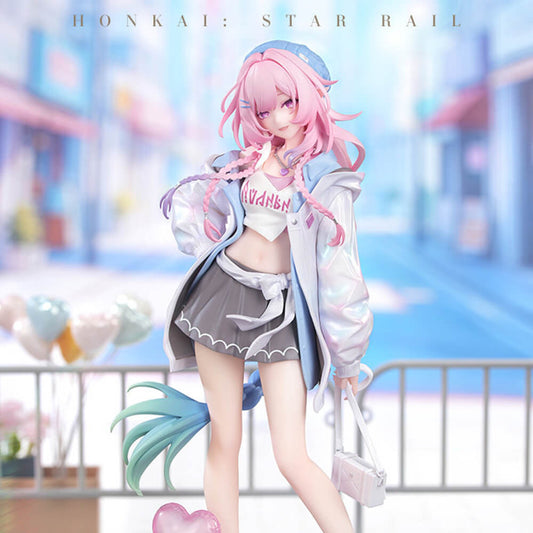
The breathtaking Honkai: Star Rail Firefly 1/7 Scale Figure. Notice the intricate shading on her skirt and the translucent aesthetic elements.
Who should buy Scale Figures? Serious collectors who want museum-quality representations of their absolute favorite "main" characters and have dedicated, dust-free display shelves (like a Detolf or an official LED display box).
2. The Poseable Powerhouses: Nendoroids & Action Figures
What if you want to recreate iconic scenes from the game, or change your character's expression based on your mood? Enter the realm of articulated action figures, most notably the legendary Nendoroid line by Good Smile Company.
The Nendoroid Phenomenon
A Nendoroid is a specific brand of highly stylized, chibi-proportioned action figures (usually around 10cm or 4 inches tall). They feature a large head and a smaller body, capturing the "cute" essence of the character while retaining a shocking amount of detail.

The Aventurine Nendoroid Doll (Star Rail LIVE Ver.) takes poseability to the next level with actual fabric clothing.
The true magic of a Nendoroid lies in its modularity. They almost always come with:
- Multiple Faceplates: Swap a stoic combat face for a winking, smiling, or even crying expression.
- Interchangeable Limbs: Different arms and legs allow you to pose them drawing a sword, holding a cup of coffee, or casting a spell.
- Props and Pets: They frequently include iconic in-game items or tiny companion mascots.
Who should buy Nendoroids? Fans who love interacting with their collection, taking toy photography, or want a high-quality figure that easily fits on a crowded computer desk.
3. The Desk Companions: Chibi & Q-Version Figures
If you want to build an army of characters without breaking the bank or running out of shelf space, "Chibi" (or Q-Version) figures are your best friend.
What are Q-Version Figures?
The term "Q-Version" (Cute Version) refers to static, non-poseable figures with exaggerated, adorable proportions. They are essentially the cheaper, smaller cousins of Scale Figures, retaining great official designs but with simplified paint jobs.

Compact and charming: The Wuthering Waves Cantarella Q Version Figure is perfect for a cozy desk setup.
This category also includes the massively popular Blind Box Figures (like the Genshin Impact Fatui Harbingers series). These are highly collectible, highly addictive, and perfect for lining the top of your PC monitor.
Who should buy Chibi/Q-Version Figures? Budget-conscious fans, those with limited space, or players who want to collect entire factions (like the Stellaron Hunters or Victoria Housekeeping) without spending thousands of dollars.
"Material Science 101: Most official anime figures are made of a combination of PVC (Polyvinyl Chloride) and ABS (Acrylonitrile Butadiene Styrene). PVC is a softer plastic used for skin, flowing hair, and clothing because it captures texture beautifully. ABS is a rigid, hard plastic used for structural integrity—like the figure's base, swords, or mecha parts. Together, they create a durable, detailed masterpiece."
The Ultimate Matchup: Which Should You Choose?
Still on the fence? Use our quick comparison matrix to find your perfect figure type:
| Feature | 1/7 or 1/8 Scale Figures | Nendoroids & Action Figures | Chibi & Q-Version (Blind Boxes) |
|---|---|---|---|
| Average Price | $$$ ($150 - $300+) | $$ ($50 - $90) | $ ($15 - $40) |
| Space Required | Large (Needs dedicated shelf) | Small (Fits easily on a desk) | Minimal (Can fit anywhere) |
| Poseability | None (Static poses) | High (Swappable faces/limbs) | None (Static poses) |
| Detail Level | Museum Quality (Gradients, textures) | High (Stylized but sharp) | Moderate (Simplified paint jobs) |
| Best Vibe For... | The Ultimate Shrine Centerpiece | Toy Photography & Desk Interaction | Army Building & Monitor Decoration |
Frequently Asked Questions (FAQ)
What does "Pre-Order" mean for anime figures?
In the anime figure industry, most high-end Scale Figures and Nendoroids are made-to-order. A prototype is shown, and a "Pre-Order" window opens for a few months. The manufacturer only produces the exact number of figures ordered during this window. Because manufacturing takes time, a figure pre-ordered today might not ship until 8-12 months later. If you miss the pre-order window, you may have to pay heavily inflated aftermarket prices.
How do I safely clean my PVC scale figures?
Dust is the enemy of any collection. Never use harsh household chemicals or rough paper towels on your figures. Use a soft, clean makeup brush or a specialized anti-static dusting brush to gently sweep away dust. For stubborn smudges, a slightly damp microfiber cloth can be used. Keep your figures away from direct, harsh sunlight to prevent UV fading and PVC warping.
How can I tell if a figure is an official product or a bootleg?
Bootlegs (fakes) often suffer from terrible paint jobs (especially around the eyes), drooping parts, and strong chemical smells. The easiest way to avoid fakes is to buy from authorized, trusted retailers like Bahomu, which directly sources official merchandise from HoYoverse, Kuro Games, and Good Smile Company. Authentic figures also come with official holographic licensing stickers on the box.
What is a "Prize Figure"?
Prize figures are a category common in Japan, originally meant to be won in UFO catcher crane games. They are generally 1/8 to 1/7 in size but are much cheaper to produce than standard Scale Figures. They have less intricate shading and simpler bases. They are great for budget collectors who want a larger figure without the premium price tag.
Whether you are displaying a majestic 1/7 scale Firefly or a mischievous little chibi Aventurine, your collection is a reflection of your journey. Happy collecting!