


The Art of Layering: How to Display Scale Figures, Acrylics, and Blind Boxes Like a Pro


Every dedicated anime and gacha gamer eventually hits the exact same wall: the dreaded "cluttered shelf syndrome." You spend months pre-ordering breathtaking 1/7 scale figures, hunting down limited-edition blind boxes, and collecting gorgeous acrylic stands from games like Honkai: Star Rail, Genshin Impact, and Zenless Zone Zero. But when you finally put them all on your desk or Detolf display case, the result looks less like an elegant museum exhibition and more like a chaotic merchandise hoard.
The secret that professional collectors and museum curators know is simple: Visual Layering. A truly aesthetic display isn't just about putting your most expensive items in the front. It’s about creating depth, guiding the viewer's eye through a scene, and mixing different mediums (like PVC, acrylic, and paper) to tell a story.
In this comprehensive masterclass, we will break down the exact architectural rules for building the perfect anime display. By treating your merchandise as elements of a diorama—dividing them into the Centerpiece, the Midground, the Foreground, and the Backdrop—you can transform your chaotic collection into a breathtaking, cohesive shrine to your favorite universe.
Tier 1: The Anchor — Establishing Your Centerpiece
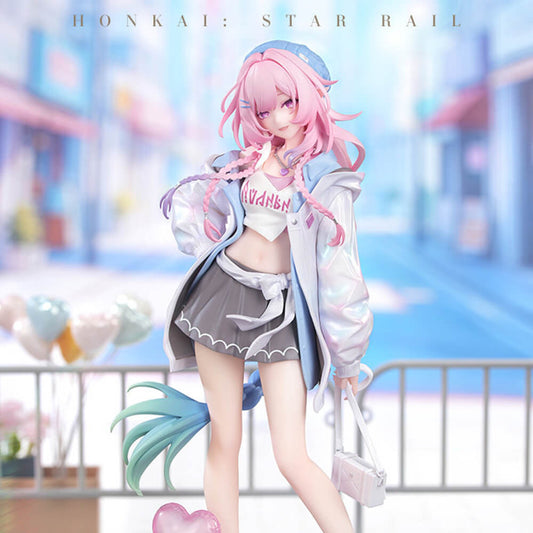
Every great painting needs a focal point, and your display shelf is no different. The anchor of your setup should immediately draw the eye and establish the thematic tone for the rest of the space. In the anime collecting world, this role is exclusively reserved for high-fidelity 1/7 or 1/8 Scale Figures.

Consider the jaw-dropping Honkai: Star Rail Aventurine 1/7 Scale Figure. Standing tall with its intricate base, flowing dynamic sculpt, and opulent color palette, a figure of this caliber commands attention. When placing your centerpiece, do not push it flush against the back wall of your shelf. Instead, place it slightly off-center (adhering to the rule of thirds) or dead in the middle, leaving breathing room behind it. This negative space is crucial; it prevents the display from looking flat and allows light to wrap around the PVC sculpt, highlighting the intricate shading and details crafted by the sculptors.
Pro Tip: Never place two massive scale figures shoulder-to-shoulder unless they are specifically designed as a pair. Doing so creates visual competition, making both pieces look less impressive. Let your anchor breathe.
Tier 2: The Midground — Building Context with Acrylics
Once your centerpiece is established, you need to surround it with context. If your scale figure is the lead actor, the midground items are the supporting cast and the set design. This is where Acrylic Stands and Quicksand Blocks shine.

Acrylic merchandise serves a very specific architectural purpose in a display: light refraction. A dense PVC figure absorbs light, but acrylic blocks, like the mesmerizing Honkai: Star Rail Light Cone Acrylic Quicksand Block, catch ambient room light and scatter it. By placing thick acrylic blocks slightly behind and to the side of your main figure, you create a glowing halo effect.
Furthermore, multi-layered acrylic stands—such as the Wuthering Waves Inkwash Reverie Series Three-Piece Acrylic Standee—literally have depth built into them. By placing these slightly behind your main figure, you create a three-dimensional "forest" effect. The transparency of the acrylic ensures that it doesn't block the items behind it, maintaining an airy, sophisticated look rather than a solid wall of plastic.
Tier 3: The Foreground — Adding Life with Blind Boxes & Minis
A common mistake collectors make is leaving the front edge of their shelf completely empty, or conversely, lining it with tall items that block the view of the centerpiece. The foreground should be reserved for low-profile, highly characterful items that invite the viewer to lean in close. This is the domain of Blind Box Figures, Chibis, and Nendoroids.

Miniature figures provide a sense of scale. When you place a tiny, adorable Zenless Zone Zero × POP MART Bangboo Party Series Figure at the feet of a towering 1/7 scale character, it creates "forced perspective," making your centerpiece look even more epic and imposing.
These smaller figures are also excellent for hiding the unsightly, plain plastic bases that come with some acrylic stands or older figures. Cluster 2 or 3 blind box figures around the base of your centerpiece to create a dynamic, lively "diorama" effect. It looks as though the smaller characters are interacting with the environment created by the larger pieces.
Tier 4: The Backdrop — Framing the Universe
Finally, we arrive at the backdrop. The blank, white wall of a bookshelf or a glass cabinet is the enemy of immersion. To truly transport your collection into Teyvat, Solaris-3, or the Astral Express, you must address the vertical plane behind your figures.
Flat, highly illustrative merchandise like Laser Tickets, Shikishi (Colored Paper) Boards, and Metallic Badges are perfect here. Items like the Honkai: Star Rail Cosmic Candy House Series Colored Paper can be propped up using a simple acrylic easel against the back wall. This provides a thematic wallpaper for your 3D figures to stand against. If you have the budget, investing in official Figure Display Boxes with built-in LED lighting and printed backgrounds completely solves the backdrop issue, turning your shelf into an isolated, illuminated showcase.
"The rule of thumb for anime visual merchandising is the 'Triangle Method.' Your tallest item (the scale figure) forms the peak in the back-middle. Your mid-sized items (acrylics) form the middle slopes, and your smallest items (blind boxes) form the wide base at the front. This naturally guides the human eye in a satisfying, stable loop." — The Bahomu Curators
The Bahomu Display Hierarchy Matrix
To help you structure your next display overhaul, we have broken down the exact hierarchy and placement strategy for the most common types of official anime merchandise:
| Merchandise Type | Display Tier (Depth) | Primary Function | Lighting Strategy |
|---|---|---|---|
| 1/7 & 1/8 Scale Figures | Center / Mid-Back | The visual anchor; dictates the theme. | Direct overhead spotlight to cast dramatic shadows. |
| Quicksand & Acrylic Blocks | Midground (Sides) | Catches light; adds structural weight. | Backlighting or side-lighting to illuminate the liquid/glitter. |
| Acrylic Standees | Midground / Background | Provides environment and 3D depth without blocking views. | Ambient room light (highly reflective surfaces). |
| Blind Boxes / Chibis / Nendoroids | Foreground (Front Edge) | Adds personality; hides ugly plastic bases; creates scale. | Spill-over light from the centerpiece; requires no direct light. |
| Shikishi Boards & Laser Tickets | Background (Wall) | Frames the scene; covers blank shelf walls. | Keep out of direct UV light to prevent color fading over time. |
Summary and Final Recommendation
Curating a beautiful anime collection is an art form. By treating your shelf as a layered diorama, you can rescue your merchandise from looking like a cluttered retail bin and elevate it to museum quality. Remember: use your Scale Figures to anchor the eye, utilize thick Acrylic Blocks to bounce light and create atmosphere in the midground, scatter cute Blind Box Figures in the front for personality, and frame the entire scene with gorgeous Colored Paper and Tickets in the back.
Ready to upgrade your display? Start by securing a stunning centerpiece, or grab a few blind boxes to breathe life into your foreground. Your personal geek sanctuary awaits.
Shop All Figures, Acrylics & Blind Boxes
Frequently Asked Questions (FAQ)
How do I prevent my blind box figures from tipping over in the foreground?
Because blind box figures often lack wide bases, they are prone to tipping when a shelf is bumped. We highly recommend using small dots of museum putty (or clear acrylic mounting putty) under their feet. It secures them firmly to the shelf or desk mat but peels off cleanly without damaging the PVC paint or leaving a greasy residue.
Is it a bad idea to mix different game IPs (like Genshin and ZZZ) on the same shelf?
Not at all! While dedicated "shrines" (e.g., an all-Aventurine shelf) look amazing, mixing IPs works beautifully if you group them by color palette or vibe rather than by game. For example, the neon, cyberpunk aesthetics of Zenless Zone Zero blend perfectly with the futuristic techwear vibes of Honkai: Star Rail's Stellaron Hunters. Similarly, Genshin's high-fantasy elements pair well with Wuthering Waves' traditional inkwash series.
What exactly is a "Quicksand" Acrylic Block?
A quicksand acrylic block (like the ones popular in the Honkai: Star Rail Light Cone series) is a thick, hollowed-out acrylic display piece filled with liquid, glitter, and tiny floating metallic elements. When you shake or flip the block, the glitter cascades down like snow or quicksand behind the printed character image, creating a mesmerizing, dynamic background effect.
How do I keep dust off my multi-layered display without ruining the setup?
Dust is the enemy of layered displays. The absolute best solution is to house your collection inside a glass cabinet (like an IKEA Detolf) or buy official, enclosed Figure Display Boxes. If your display is on an open desk, invest in a soft, high-quality makeup brush (like a large powder brush). Its ultra-soft bristles can sweep dust off delicate blind boxes and intricate scale figures without scratching the paint or knocking over your carefully placed acrylics.
Do acrylic stands scratch easily when placed next to PVC figures?
Yes, the printed backing on acrylic stands can be scratched if a hard, pointy part of a PVC figure rubs against it. Always leave at least half an inch of clearance between your acrylics and the sharp edges of your scale figures (like swords, capes, or dynamic hair pieces) to ensure your collection remains in pristine, mint condition.