


Gacha Pity Systems Explained (HSR vs. Genshin)
 Gacha Pity Systems help you when you want rare characters or items in games. In games like Honkai Star Rail and Genshin Impact, the chances are very low. Sometimes, you only have a 0.6% chance to get a strong five-star character. These systems make sure you get a good reward if you are not lucky. This helps you feel less upset. You will probably want to keep playing. New content and rewards also show up as time goes on.
Gacha Pity Systems Overview
What Is a Pity System?
You might wonder why you sometimes get rare characters after many tries in games like Honkai Star Rail or Genshin Impact. Gacha Pity Systems work as a safety net. If you do not get a high-rarity item after many pulls, the system steps in and guarantees you a reward. This helps you avoid long streaks of bad luck. You feel more confident when you know the game will eventually give you a strong character or weapon.
Let’s look at how different games set their rules for these systems:
|
Game |
Hard Pity |
Soft Pity |
Special Mechanics |
|---|---|---|---|
|
Genshin Impact |
90 pulls |
75 pulls |
50% chance for featured character after hard pity; Fate points for weapons. |
|
Honkai: Star Rail |
90 pulls |
70 pulls |
50% chance for featured SSR after hard pity; pity carries over. |
|
Solo Leveling: Arise |
80 pulls |
64 pulls |
Soft pity increases chances by 5.8% after 64 pulls; Selection Draw for wishlist characters. |
|
70 pulls |
60 pulls |
Soft pity increases chances by 2.5% for each unsuccessful pull; pity carries over on same type banners. |
|
|
Soul Tide |
50 pulls |
N/A |
Shards obtained for each pull can be used to buy characters; no rarity for characters. |
|
Counter Side |
150 pulls |
N/A |
Pity carries over on Classified Recruitment banner; normal banners do not carry over. |
|
Aether Gazer |
70 pulls |
N/A |
50% chance for featured character after hard pity; maximum of 140 pulls required. |
|
Goddess of Victory: Nikke |
200 pulls |
N/A |
Spark system allows players to buy characters after 200 pulls; tickets carry over. |
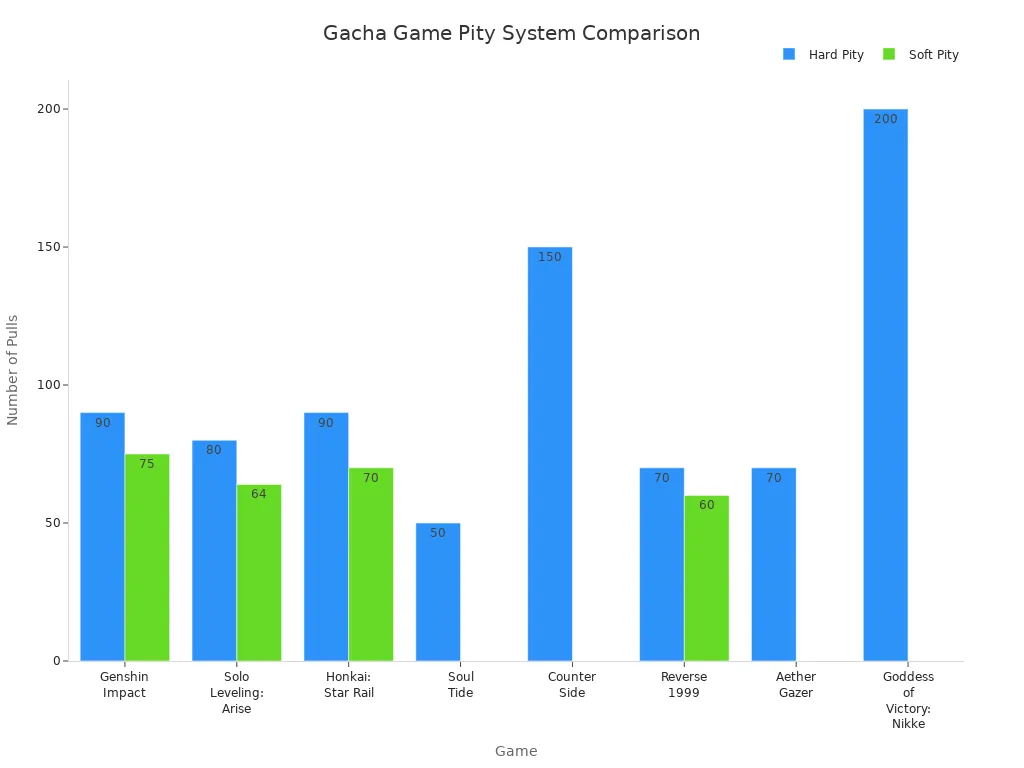
Tip: You should always check the rules for each game. Some games let you carry over your progress toward pity, while others reset it.
Soft vs. Hard Pity
Gacha Pity Systems use two main types: soft pity and hard pity. Soft pity means your chances of getting a rare item slowly increase as you make more pulls. For example, in many games, your odds go up after 60 or 70 pulls. Hard pity works differently. It gives you a guaranteed rare item after a set number of pulls, such as 90 in Genshin Impact or Honkai Star Rail. You do not need to worry about luck after reaching this number.
Some players think the pity rate is lower than it really is. You might hear people say the rate is 60 pulls, but it is actually 80 or 90 for most banners. Others believe they never get five-star characters, but the system always guarantees one after enough pulls. Many also misunderstand how effective these systems are. The rates may seem low, but they are better than you might expect.
Gacha Pity Systems help you plan your pulls and avoid disappointment. You can use this knowledge to make smarter choices and enjoy your game more.
Honkai Star Rail Pity System
Banner Types
You will find several banner types in Honkai Star Rail. Each banner has its own rules for how the pity system works. Here is a table that shows the main banners and their pity counts:
|
Banner |
4-Star |
5-Star |
|---|---|---|
|
Character Event Warp |
10 Pulls |
90 Pulls |
|
Light Cone Event Warp |
10 Pulls |
80 Pulls |
|
Regular Warp |
10 Pulls |
90 Pulls |
|
Starter Warp |
10 Pulls |
50 Pulls |
You can see that every banner gives you a 4-star item or character after 10 pulls. The number of pulls for a guaranteed 5-star depends on the banner.
Pity Thresholds
Each banner has a soft and hard pity threshold. The soft pity means your chances of getting a 5-star go up after a certain number of pulls. Hard pity is the maximum number of pulls before you are guaranteed a 5-star. Here is a quick look:
|
Banner Type |
Soft Pity |
Hard Pity |
|---|---|---|
|
Character Event Warp |
75 pulls |
90 pulls |
|
Light Cone Event Warp |
65 pulls |
80 pulls |
If you do not get a 5-star by the hard pity number, your next pull will always give you one.
Rates for 5-Star and 4-Star
The game shows you the exact rates for each rarity. You can check the table below:
|
Item Type |
Probability Rate |
|---|---|
|
5-Star Items |
0.800% |
|
4-Star Items |
6.600% |
You can also see the breakdown for heroes and light cones:
|
Item Type |
Probability Rate |
|---|---|
|
5-Star Heroes |
0.3% |
|
4-Star Heroes |
2.550% |
|
5-Star Light Cones |
0.3% |
|
4-Star Light Cones |
2.550% |
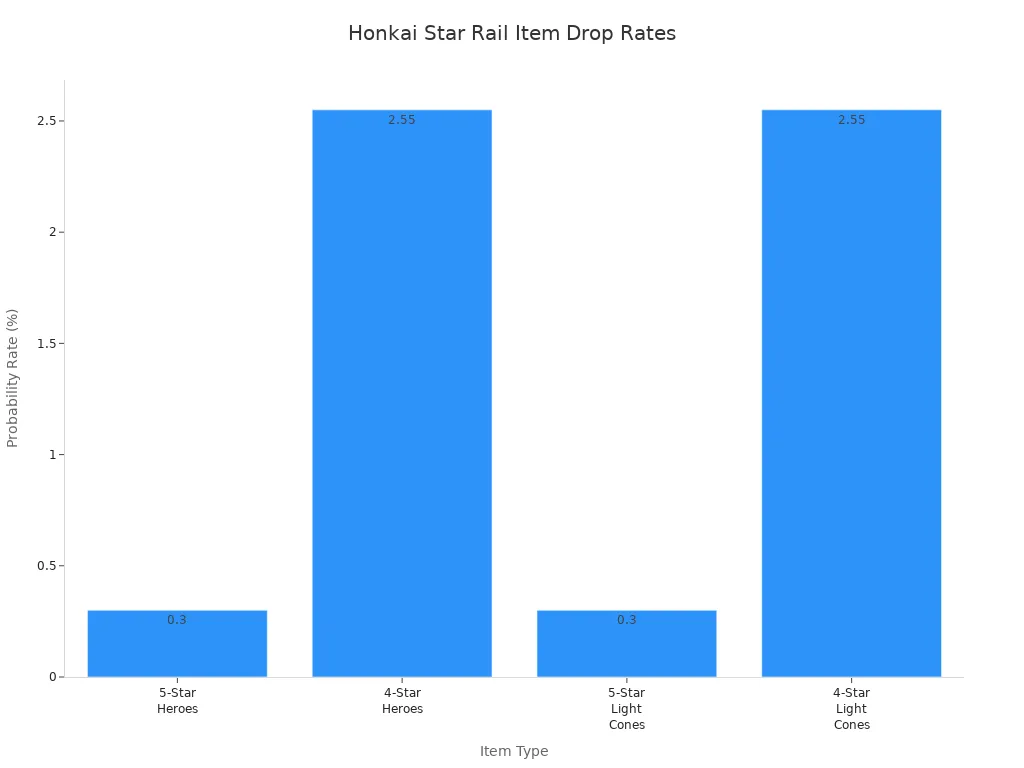
Soft and Hard Pity in HSR
Gacha Pity Systems in Honkai Star Rail use both soft and hard pity. You will always get a 5-star character after 90 pulls on a Character Event Warp. Your chances start to rise after 75 pulls, so you might get lucky before reaching 90. The Light Cone Event Warp works the same way, but with 80 pulls for hard pity and 65 for soft pity.
Example: If you want a featured 5-star character like Kafka, you start pulling on the Character Event Warp. You do not get a 5-star after 89 pulls. On your 90th pull, the game guarantees you a 5-star. Sometimes, you might get one earlier if you hit soft pity. At Bahomu, we know the thrill of finally seeing that gold glow!
This system helps you plan your pulls and manage your resources. You know you will not go over the hard pity number without getting a top reward.
Genshin Impact Pity System
Banner Types
You will see three main banner types in Genshin Impact. Each banner interacts with the Gacha Pity Systems in its own way. The table below shows how many wishes you need for guaranteed rewards:
|
Banner Type |
4-Star Guarantee |
5-Star Guarantee |
|---|---|---|
|
Featured Character Banner |
10 Wishes |
90 Wishes |
|
Featured Weapon Banner |
10 Wishes |
80 Wishes |
|
Permanent Banner |
10 Wishes |
90 Wishes |
You get a 4-star item every 10 wishes on any banner. The 5-star guarantee depends on the banner you choose.
Pity Thresholds
Genshin Impact uses both hard and soft pity. Hard pity means you will always get a 5-star after a set number of wishes. For character banners, you reach hard pity at 90 wishes. For weapon banners, you reach hard pity at 80 wishes. Soft pity starts around 75 wishes for characters and 65 wishes for weapons. Your chances of getting a 5-star increase with each wish after soft pity begins.
-
Hard Pity: 90 wishes for character banners, 80 for weapon banners.
-
Soft Pity: Your odds go up between 60 and 80 wishes.
-
Shared Pity: Character banners share pity counters. Weapon banners do not.
Rates for 5-Star and 4-Star
You might wonder about your chances for rare items. The table below shows the published rates for 5-star and 4-star rewards:
|
Item |
Base Rate |
Average Rate including Pity |
|---|---|---|
|
5★ Character or Weapon |
0.6% |
1.6% |
|
4★ Character or Weapon |
5.1% |
13% |
You see that the base rate for a 5-star is very low. The Gacha Pity Systems help you by raising your chances as you make more wishes.
Soft and Hard Pity in Genshin
Genshin Impact uses both soft and hard pity to protect you from bad luck. If you do not get a 5-star after many pulls, the system guarantees one at the hard pity threshold. Soft pity increases your odds before you reach the maximum. You can plan your pulls and know when you will get a rare character or weapon.
Example: You want a limited 5-star character. You start wishing on the featured character banner. You reach 75 wishes and notice your chances go up. If you do not get the character by 89 wishes, your 90th wish will guarantee a 5-star. Sometimes, you get lucky before reaching hard pity.
Gacha Pity Systems in Genshin Impact make your experience less frustrating. You can save your resources and pull with confidence.
Discover Genshin Impact Collectibles
Gacha Pity Systems: HSR vs. Genshin
Similarities
You will notice that Honkai Star Rail and Genshin Impact use very similar Gacha Pity Systems. Both games want to make sure you do not feel unlucky for too long. They use soft pity and hard pity to help you get rare characters or weapons. When you keep pulling and do not get a five-star, your chances go up after a certain number of pulls. If you still do not get a five-star, the game guarantees one after you reach the hard pity number.
Here is a table that shows how both games use these systems:
|
Feature |
Honkai: Star Rail |
Genshin Impact |
|---|---|---|
|
Pity System |
Soft pity system increases chances |
Similar soft pity mechanics |
|
Guaranteed Pulls |
After a certain number of attempts |
After a certain number of attempts |
You always get a four-star item or character after 10 pulls in both games. You also see your chances increase as you get closer to the hard pity number. This system helps you plan and saves you from long streaks of bad luck.
Note: Both games let you carry over your pity progress between banners of the same type. This means your hard work does not go to waste if you switch banners.
Differences
Even though the two games look similar, you will find some important differences when you look closer. These differences can change how you plan your pulls and how happy you feel with your results.
-
Pity Thresholds: Honkai Star Rail uses 90 pulls for hard pity on character banners and 80 for light cone banners. Genshin Impact also uses 90 for character banners but 80 for weapon banners. The soft pity starts a bit earlier in Honkai Star Rail.
-
Banner Mechanics: In Genshin Impact, if you do not get the featured five-star character, your next five-star is guaranteed to be the featured one. In Honkai Star Rail, you have a 50% chance for the featured character, and if you lose, the next five-star is guaranteed to be the featured one.
-
Weapon Banners: Genshin Impact uses a Fate Points system for weapon banners. You can choose a weapon, and after two failed attempts, you are guaranteed your chosen weapon. Honkai Star Rail does not have this system for light cones.
-
Pity Carryover: Both games let you carry over pity between banners of the same type, but Genshin Impact separates weapon and character pity. Honkai Star Rail keeps them separate as well, but the details can feel different when you switch banners.
You will also notice that the rates for five-star items are slightly different. Honkai Star Rail gives you a 0.8% base chance, while Genshin Impact gives you a 0.6% base chance.
Which Is More Favorable?
You might wonder which game gives you a better chance or feels more fair. Both Gacha Pity Systems help you avoid bad luck, but one may feel more friendly to you as a player.
-
If you want a featured character, both games give you a 50% chance at first. If you lose, your next five-star is guaranteed to be the featured one. This makes both systems fair for character banners.
-
Genshin Impact gives you more control on weapon banners with the Fate Points system. You can pick the weapon you want and get it after three five-star pulls at most. Honkai Star Rail does not have this feature, so you may need more luck for light cones.
-
Honkai Star Rail starts soft pity a bit earlier, so you might get lucky sooner. The base rates are also a bit higher.
Tip: If you care most about getting a specific weapon, Genshin Impact's system is more player-friendly. If you want a featured character, both games treat you fairly, but Honkai Star Rail gives you a slightly better chance with its higher base rate and earlier soft pity.
You should think about what matters most to you. If you want more control over your pulls, Genshin Impact's weapon banner system stands out. If you want a higher chance for characters and a faster soft pity, Honkai Star Rail may feel better.
Player Impact and Strategy
Planning Pulls
Gacha Pity Systems shape how you plan your pulls in both Honkai Star Rail and Genshin Impact. You can use the carry-over pity feature to save resources for the characters or items you want most. This system lets you avoid wasting pulls on banners you do not care about. You can make smarter choices by following these steps:
-
Plan Your Pulls: Look up upcoming banners. Decide which characters or weapons you want before spending your resources.
-
Track Your Pity: Write down how many pulls you have made. This helps you know how close you are to a guaranteed reward.
-
Set a Budget: Choose how much you want to spend. Stick to your limit to avoid overspending.
-
Know When to Stop: If you reach your budget or stop having fun, take a break from pulling.
Tip: Both games let you carry over your pity between similar banners. This means your progress is safe even if you switch banners.
Maximizing Value
You can get more value from your pulls by using a few simple strategies. Gacha Pity Systems encourage you to think ahead and manage your resources well. Here are some ways to make the most of your experience:
-
Save your premium currency for banners with your favorite characters or weapons.
-
Watch for special events that give bonus rewards or discounts on pulls.
-
Join the community to learn about upcoming banners and share tips with other players.
-
Take breaks to avoid spending too much money or time.
The presence of a pity system can also affect how much you spend. Many players feel more willing to invest money because they know they will get a guaranteed reward after enough pulls. The table below shows how pity systems can influence spending and engagement:
|
Evidence Description |
Findings |
|---|---|
|
The presence of a pity system increases the likelihood of players spending more money. |
Players are incentivized to invest more to reach the threshold for guaranteed rewards. |
|
Players who engage with the game for a longer duration tend to spend more. |
Extended playtime correlates with increased financial investment in the game. |
Over time, Gacha Pity Systems help keep you engaged. You feel the system is fair because your efforts always lead to a reward. Both free-to-play and paying players can progress, which keeps the game fun for everyone.
You now know that both Honkai Star Rail and Genshin Impact use pity systems to protect you from bad luck. HSR gives you a higher base rate and earlier soft pity, while Genshin offers more control on weapon banners. You should pick the system that matches your goals and playstyle. For more tips, check these helpful resources:
|
Resource |
Description |
|---|---|
|
Learn how to pull smarter in Honkai: Star Rail. |
|
|
Use tools to plan your pulls and track pity. |
And while you're strategizing your next big pull, remember that Bahomu is here to bring your favorite characters from the screen to your shelf!
FAQ
How does pity carry over between banners?
You keep your pity progress when you switch between banners of the same type. For example, if you pull 50 times on one character banner, you start the next character banner at 50 pulls.
Can you get a 5-star before reaching hard pity?
Yes, you can. Soft pity increases your chances with each pull after a certain point. You might get a 5-star before hitting the hard pity number.
What happens if you lose the 50/50 on a featured banner?
If you do not get the featured 5-star character, your next 5-star pull on that banner will guarantee the featured character. This rule helps you plan your pulls.
Do free-to-play players benefit from pity systems?
Absolutely! Pity systems help free-to-play players by guaranteeing rare rewards after enough pulls. You can save your resources and still get strong characters or weapons.
Are the rates for 5-star items the same in both games?
No, the rates differ. Honkai Star Rail gives you a 0.8% base chance for 5-star items. Genshin Impact offers a 0.6% base chance. Both games use soft and hard pity to increase your odds.